


Apple strategic marketing: cntegrated communication, storytelling and customer journey.
Introduction
Apple is one of the most iconic brands in the world, not only for its technological innovation but also for its ability to build integrated communication that touches every point of the customer journey through strong storytelling. This case study takes an in-depth look at how the brand has created a coherent, emotional and user-centered communication strategy, becoming a model for companies in every industry to follow.

The strength of integrated communication
Integrated Communication: consistency across all channels
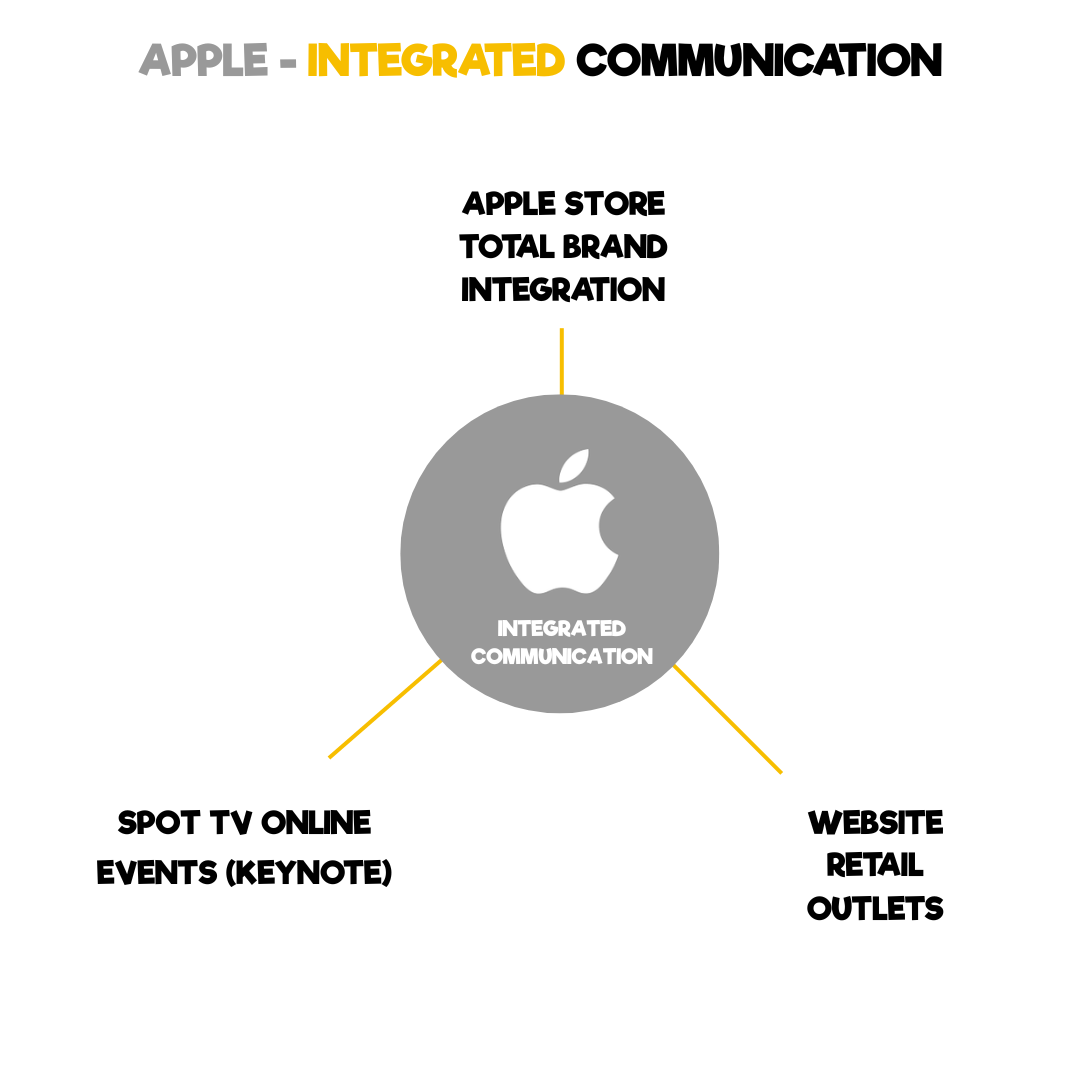
The key to Apple's success lies in its ability to create integrated communication that unifies message, tone, and objectives across all channels-from official events to social media, from television commercials to physical stores. Each element of communication works in synergy to reinforce brand identity and guide users along their path to purchase-a key pillar of the Apple strategic marketing .
For example, during the launch of a new iPhone, Apple excitingly presents the product in live streaming during Keynote events, reprises the same storytelling on its digital channels (official website, YouTube, Instagram), and creates immersive experiences in Apple stores.
Key elements of Apple's integrated communication
Apple's strategy is based on four main pillars, each of which plays a key role in delivering a consistent customer experience. These elements are connected to the core of Integrated Communication, and highlight the methodical approach of the Apple strategic marketing .
Apple Stores (Points of Sale)
Apple's physical stores are not just sales locations, but spaces specifically designed to create an immersive experience.
Apple Stores are designed for:
- Providing tangible experiences : Customers can touch, try and understand the functionality of the products directly.
- Strengthening human interaction : Employees in stores are trained to provide personalized assistance and answer customers' questions.
- Promoting innovation : The stores serve as living laboratories where visitors can discover new technologies and ideas.
This type of retail experience is an essential component of the Apple strategic marketing , which integrates physical and digital to maximize engagement.
Online TV Commercials and Events (Keynote)
Apple uses digital and television media to tell exciting and engaging stories, emphasizing the design, innovation, and user experience of its devices. Among the key points:
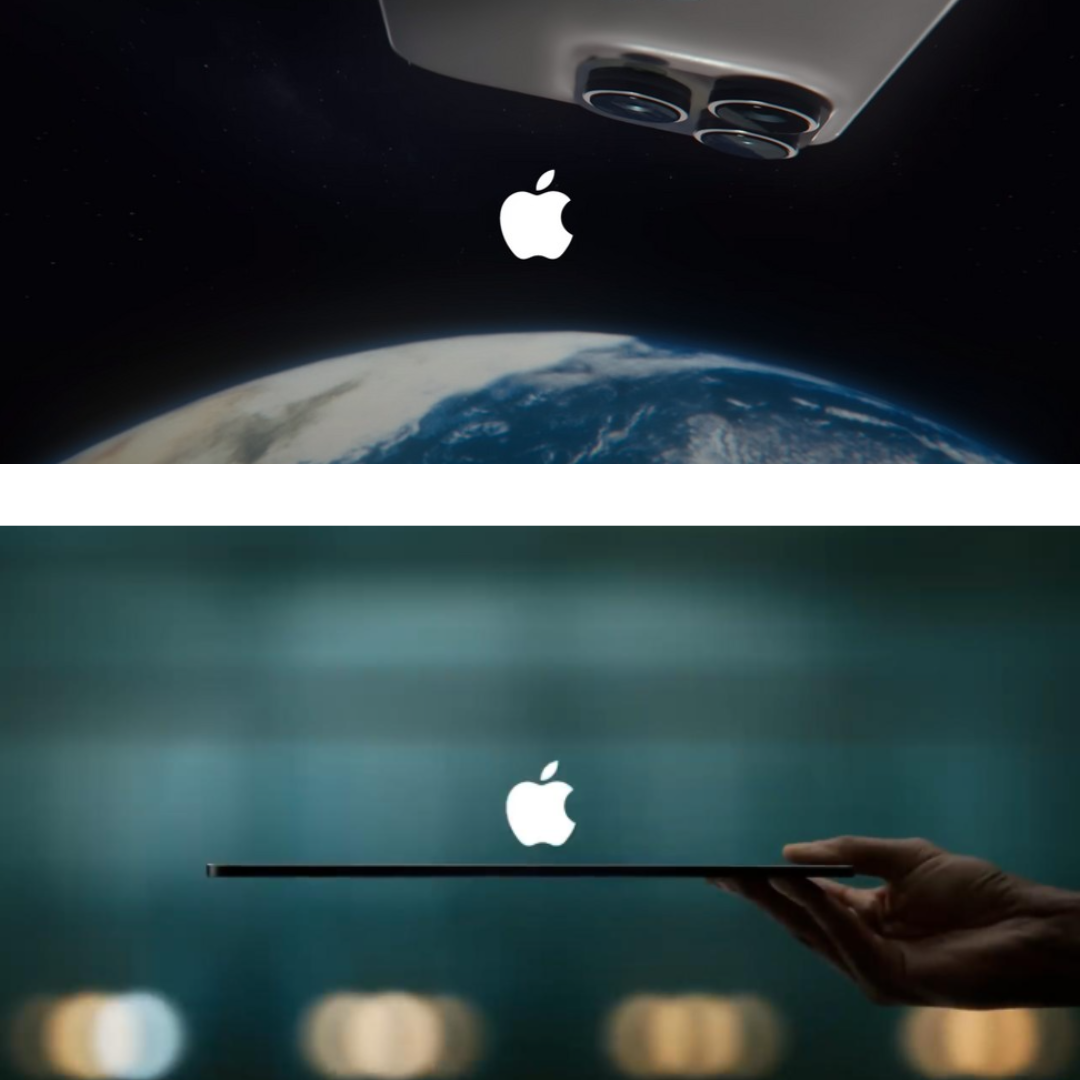
- TV and online commercials : Short, intense commercials highlighting key product features such as elegant design and intuitive usability.
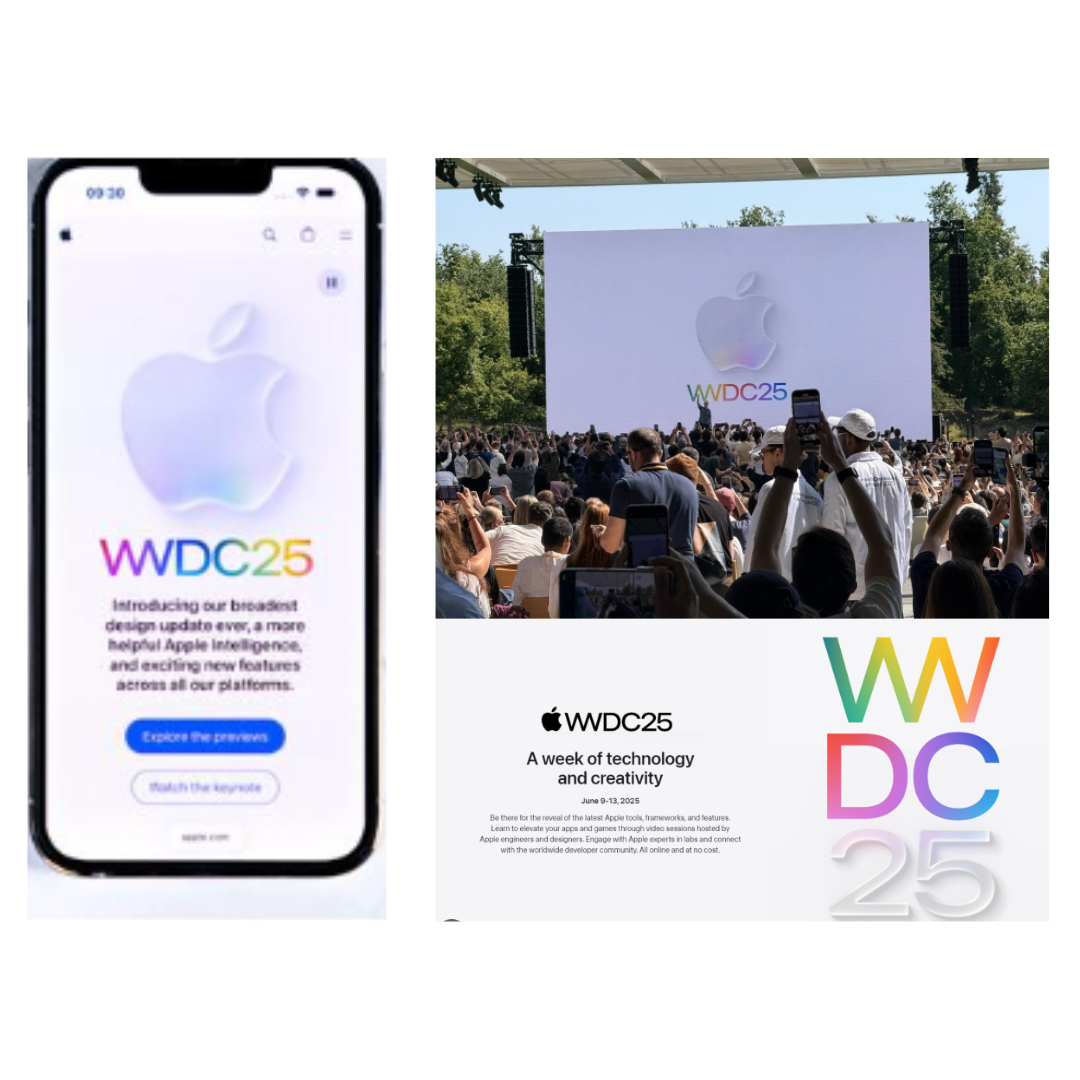
- Keynote Events : Iconic moments during which new products are presented in a highly curated setting. These events generate anticipation and a sense of exclusivity, turning the presentation of a new device into a cultural event.
Again, the focus on branding and emotion perfectly reflects the guiding principles of the Apple strategic marketing .
Official website
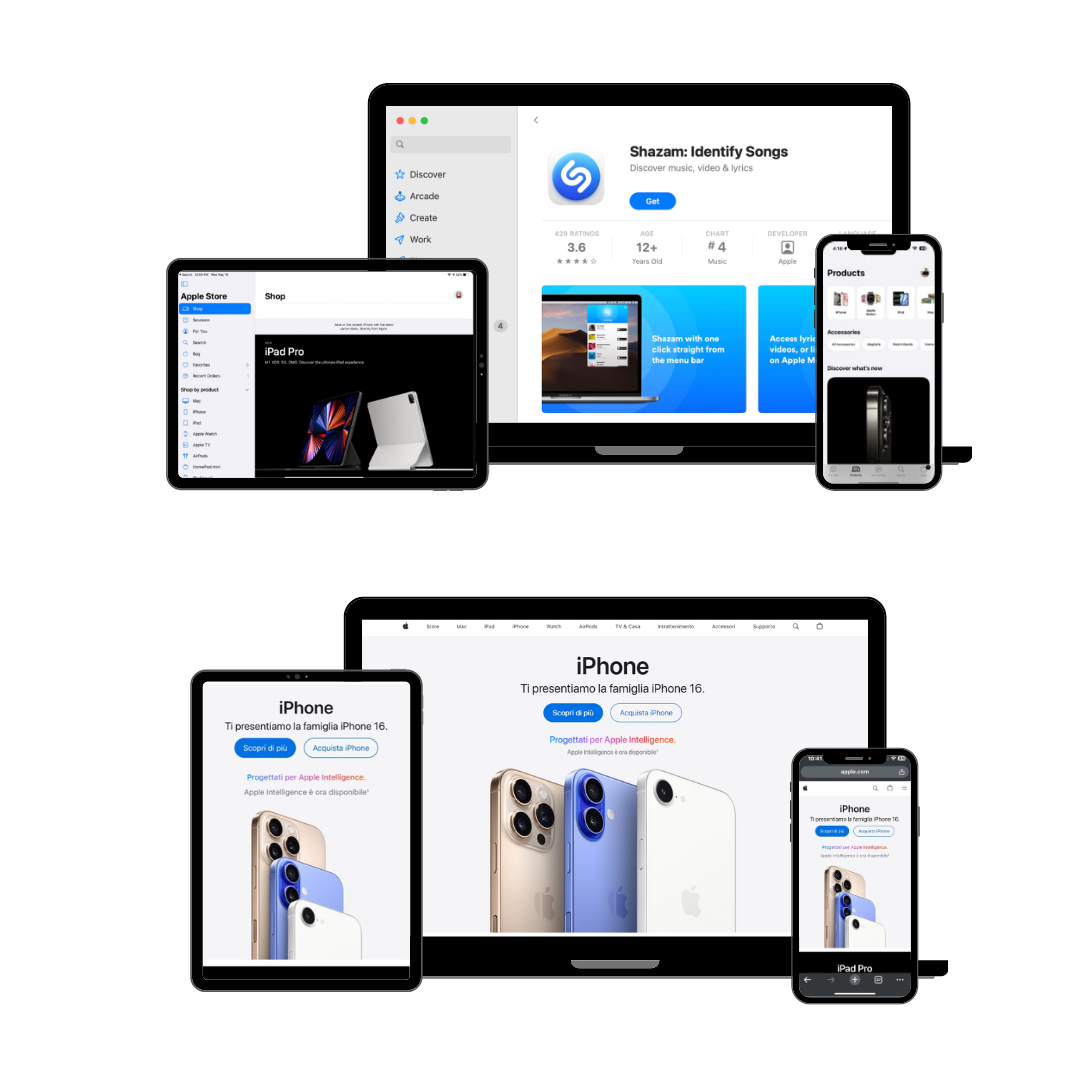
Apple's website is an example of minimalism and precision, faithfully reflecting the brand's aesthetic and functional values. It functions as:
- Digital showcase: displays products in a simple and intuitive way, allowing visitors to easily navigate between categories.
- Information Guide: provides detailed product information, technical support, and additional resources for customers.
- Continuity of experience: The design of the site is consistent with that of the physical stores and commercials, ensuring visual and perceptual continuity.
Total brand integration
All these elements-Apple Store, TV spots, keynote events, and website-are connected to the core of the Integrated Communication , as shown in the attached figure. This total integration ensures that each touchpoint is part of a unified strategy, where:
- Each channel strengthens: for example, a keynote event is promoted through TV spots and the website, while physical stores offer a tangible experience of the products presented.
- Consistency of message: all channels convey the same message of innovation, quality and simplicity, reinforcing brand identity.

Emotional Storytelling: not just technology
Apple has always known how to speak to the heart of the consumer. Its commercials, such as "Think Different," do not speak directly about the products, but tell a vision of life, of freedom, of innovation. This is an excellent example of storytelling effective: it transforms the product into a symbol of personal and cultural identity.
Apple's visual and narrative language manages to emotionally engage the user from the first contact, creating a lasting bond with the brand. Even campaigns dedicated to specific devices (such as "The Greatest" for the MacBook Pro or "Shot on iPhone") follow this logic: they show not just the product, but the result that can be achieved by those who own it.
A key element of the Apple strategic marketing is just that: turning technology into storytelling, and storytelling into human connection.
Customer Journey
Apple's customer journey is designed to be fluid, intuitive and satisfying at every stage. From online exploration to in-store purchase to day-to-day product use, every step is designed to maintain high satisfaction and a sense of brand ownership.
The after-sales experience, for example, is supported by services such as Apple Care, Genius Bar, and the cross-device ecosystem (iPhone, MacBooks, AirPods, iCloud), which makes interaction with the brand seamless and continuous. The find my app and cross-device integration allow users to have a seamless experience that goes far beyond the purchase.
In other words, the customer journey is a central tool of the Apple strategic marketing , as it allows the user to be accompanied at every stage of the relationship with the brand, nurturing loyalty and advocacy.
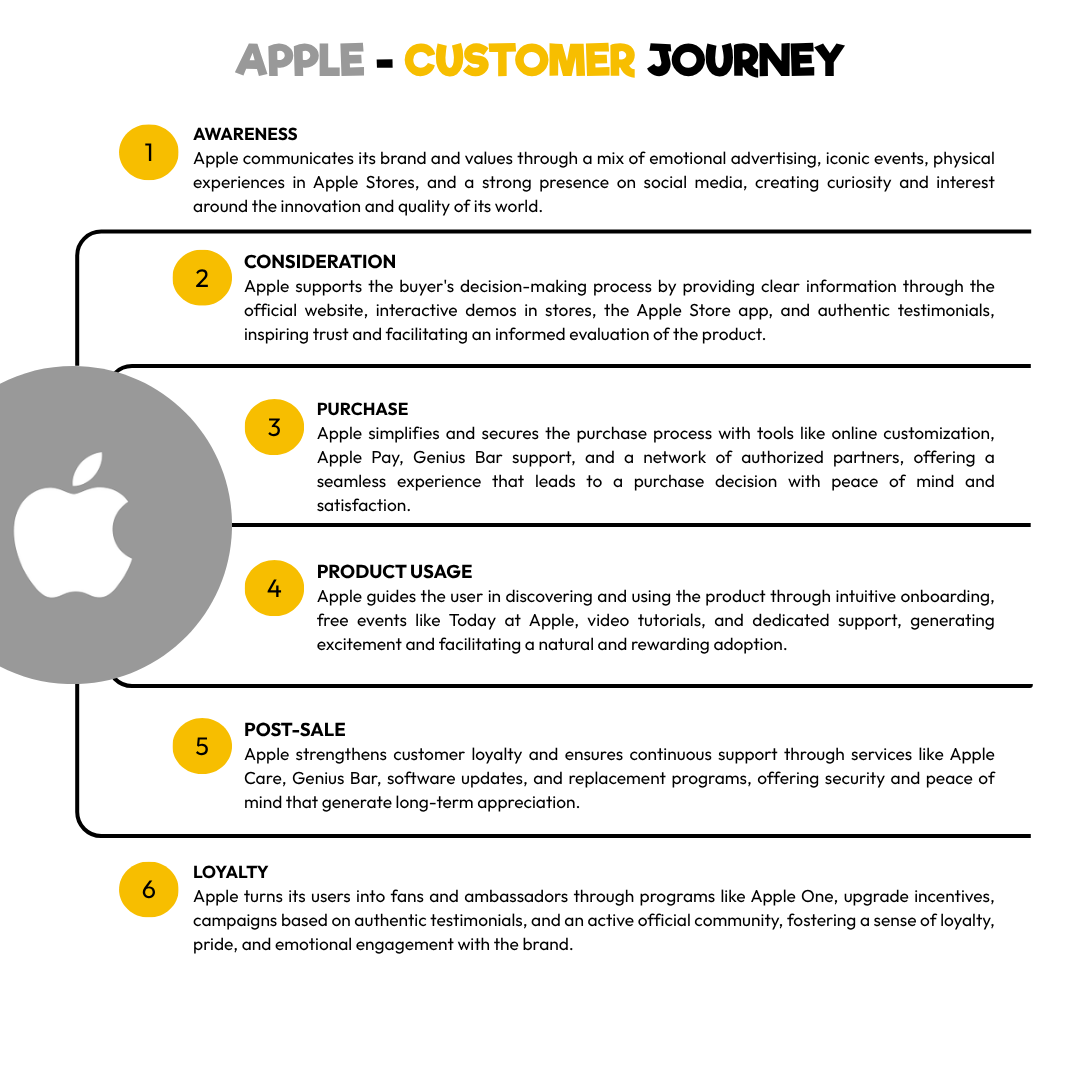 Visual diagram of Apple's customer journey, highlighting key touchpoints.
The Apple's Customer Journey is a six-step structured pathway designed to deliver a consistent, satisfying and memorable user experience:
-
Awareness (Knowledge) :
Apple creates brand awareness through emotional advertisements, iconic events such as keynotes, direct experiences in Apple stores, and a strong social presence. Goal: to generate interest in the brand. -
Consideration (Evaluation) :
Provides clear information through website, interactive demos, dedicated app and real testimonials. Goal: To help customers make informed choices. -
Purchase :
Makes purchasing easy through online personalization, Apple Pay, Genius Bar and authorized partner network. Goal: to ensure a smooth and secure process. -
Product Usage :
Accompany the user with intuitive onboarding, free courses (Today at Apple), video tutorials and dedicated support. Goal: maximize satisfaction in using the product. -
After-sales :
Offers ongoing support with Apple Care, Genius Bar, regular software updates, and replacement (Trade-In) programs. Goal: To build a lasting and reliable relationship. -
Loyalty :
Turn customers into brand ambassadors through integrated subscriptions (Apple One), upgrade incentives, real-world testimonials, and active communities. Goal: Strengthen the emotional connection to the brand.
In summary, each stage of Apple's Customer Journey is designed to guide the user from initial interest to total brand loyalty through a mix of innovation, personalized services, and emotional connection. An emblematic example of the Apple strategic marketing applied in every single detail
Conclusion
Apple is not just a technology company, but a true case study in the art of integrated communication, strategic storytelling, and flawless customer journey management. Its ability to tell exciting stories, combined with a seamless user experience, has redefined marketing and branding standards in the modern world. Brand strength lies in consistency: each channel-physical or digital-communicates the same message, reinforces the same identity, and guides the user along a clear, emotional, and engaging path. From the Keynote event that generates global hype, to the physical store where customers can touch innovation; from the minimalist and informative website, to the after-sales support that nurtures a lasting relationship, Apple demonstrates how each touchpoint is critical to building value and customer loyalty. Moreover, through storytelling that goes beyond simple product promotion, Apple manages to connect deeply with people, transforming its devices into symbols of belonging, creativity, and progress. The result is a global community of users who do not just buy a device, but embrace a lifestyle. In summary, Apple is an excellent example of how to integrate strategy, emotion, and experience to create an iconic brand. Anyone who wants to excel in the marketing world can learn a lot from this philosophy: communicating consistently, telling stories that inspire, and accompanying customers every step of the way is not just a winning strategy-it is the foundation for building lasting success.