

Sustainability and Digital Marketing: Effective Strategies for Communicating Green Values While Avoiding Greenwashing
In a world where sustainability has become a must-have criterion for consumers and companies, digital marketing plays a key role in communicating green values. However, it is not enough to proclaim one's environmental commitment: it is essential to communicate it authentically and transparently, avoiding the risk of falling into greenwashing. In this article we explore effective strategies for communicating sustainability and strengthening the brand, always ensuring consistency between concrete actions and messages conveyed.
The Sustainability Challenge in the Digital Marketing
In recent years, the concept of sustainability has become increasingly important. Today, consumers no longer evaluate a product solely on the basis of price or quality, but also examine its environmental and social impact. This change has prompted companies to integrate ethical values and environmentally sustainable practices into their communication strategies.
Digital marketing, because of its ability to reach a wide audience quickly, is a perfect tool for spreading green messages. However, adopting this strategy also comes with a crucial responsibility: avoiding greenwashing, or the exaggeration or falsification of one's environmental commitment in order to gain image benefits.
Greenwashing: What it is and How to Avoid it
What is greenwashing?
Greenwashing occurs when a company deceptively or misleadingly communicates a commitment to sustainability that, in reality, is not meaningful or actually present. This behavior can severely damage the brand reputation, reducing consumer confidence and also undermining the credibility of the industry as a whole.
Why Avoid Greenwashing?
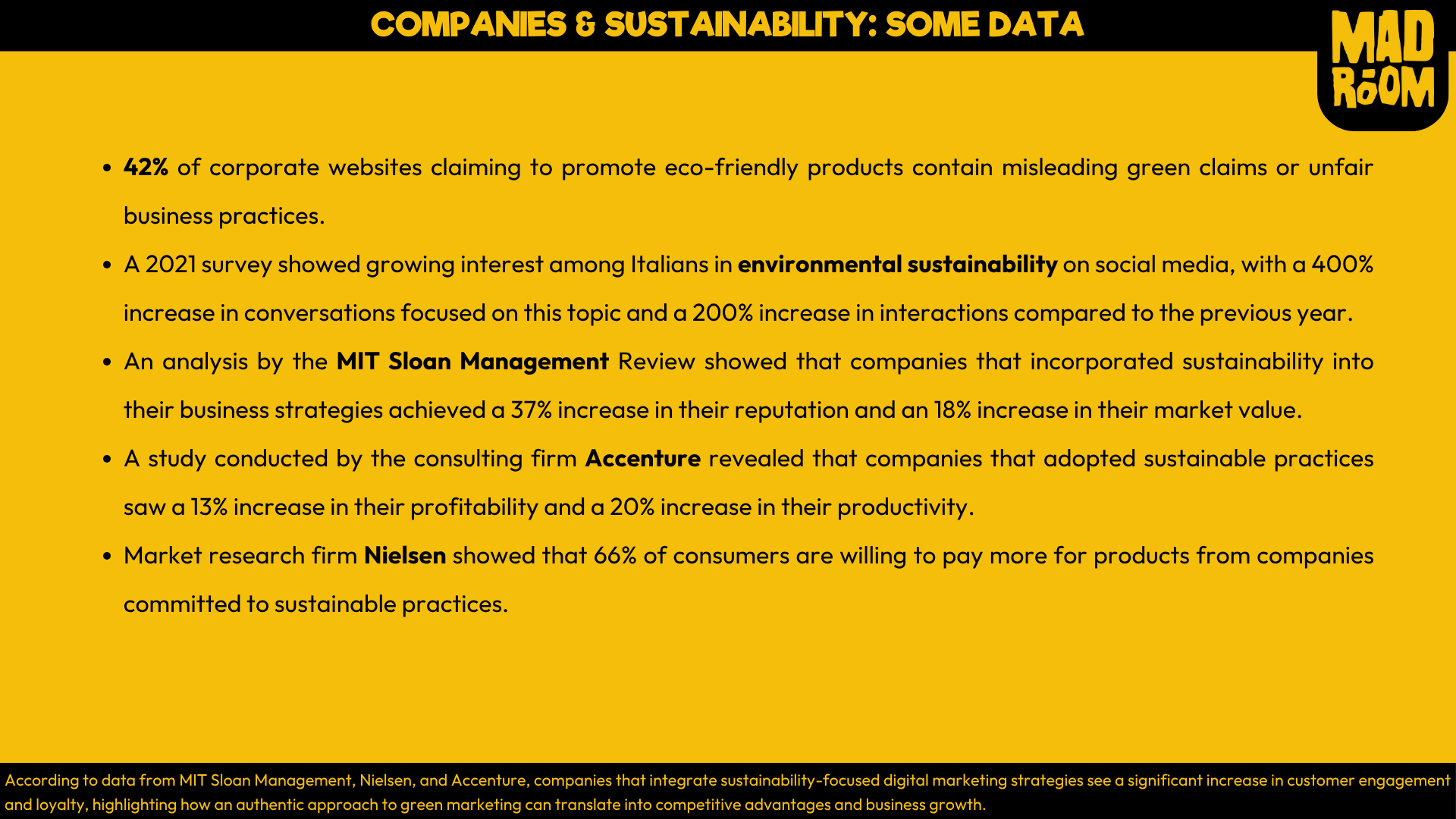
Avoiding greenwashing is critical to preserving consumer trust and protecting corporate reputation. It is necessary to base environmental communication on hard data, verified certifications and tangible results. Transparency becomes the central pillar of authentic communication: openly sharing information, progress achieved and even any critical issues allows for an honest dialogue with the public.
Effective strategies for communicating green values
Transparency and consistency
Data and certifications
Present numbers, reports and certifications that attest to the company's environmental commitment. These elements demonstrate the seriousness of the project and provide a concrete point of reference for consumers.
Telling the corporate story
Using storytelling to narrate the path to sustainability. Telling the challenges faced, solutions adopted, and achievements helps create an authentic and consistent image.
Team and community involvement
Getting employees and customers to actively participate in green initiatives strengthens the sense of belonging and authenticity of communication.
Strategic use of digital channels
Content Marketing
Create informative and engaging content that explores sustainability issues. Blogs, infographics, videos, and podcasts can be effective tools to educate the public and spread best practices.
Social Media Engagement
Social networks provide opportunities for direct dialogue with the public. Interactive campaigns, live streaming, and question-and-answer (Q&A) sessions can help answer users' questions and clarify any concerns.
Email Marketing targeted
Segmenting audiences by interests and preferences allows for personalized communications, highlighting specific projects, updates, and achievements in the green arena.
Collaborations and partnerships
Co-creation of content
Collaborate with influencers and experts in the sustainable sector to create value-added content. The credibility of influential figures can reinforce the green message and broaden the reach of communication.
Social responsibility projects
By participating in initiatives and partnerships with environmental agencies and organizations, a commitment to sustainability can be demonstrated concretely, going beyond mere words.
Innovation and technology
Digitization of sustainable processes
Use digital tools to monitor and communicate the environmental impact of business activities. Interactive dashboards, dedicated apps and real-time reports are examples of how technology can make the sustainability journey transparent.
Interactive experiences
Creating immersive digital experiences (such as virtual tours of eco-friendly facilities or interactive online workshops) allows users to gain a concrete understanding of the sustainable actions taken by the company.
Best practices for authentic green communication
Focus on concrete results
Do not limit yourself to slogans or vague statements. Sharing verifiable results and measurable progress creates a bond of trust with the public.
Constant updates
Sustainability is an ever-evolving journey. Keeping the public updated on new projects, improvements and difficulties encountered demonstrates the company's real commitment.
Feedback and open dialogue
Inviting consumers to share opinions and suggestions can provide valuable insights to further improve sustainable practices, creating an environment of transparency and participation.
Conclusions
Integrating sustainability into digital marketing means not only communicating green values, but doing so in a way that is authentic, transparent and consistent with the company's concrete actions. Avoiding greenwashing is key to building and maintaining the trust of consumers, who today demand real and measurable environmental engagement.
By adopting strategies based on transparency, smart use of digital channels, targeted partnerships and technological innovation, companies can turn their sustainable efforts into a competitive advantage while contributing to a greener and more responsible future.
The key to success lies in recognizing that sustainability is a long-term journey that requires ongoing commitment and honest communication. Only then will it be possible to turn green values into a real tool for growth and differentiation in the marketplace.