

Community newsletters: building authentic relationships one email at a time
In the constant noise of digital, making real connections is the most revolutionary strategy. And the newsletter, if well constructed, can become one of the most effective tools for nurturing trust and belonging in your community. It's not just about sending updates, but cultivating relationships.
Why newsletters are a key tool in community building
Community newsletters are not simply promotional emails. They are an ongoing relationship space where you cultivate connections and build a recognizable voice. When a piece of content arrives in your inbox, it must have one goal: to be useful, human, relevant.
Defining the audience: the basis of any effective newsletter
Who is really on your list?
Your audience is not just a list of contacts: it is a network of people with common interests, needs, and values. Collect data, observe behaviors, listen to feedback. Create personas - type profiles-to represent different segments and build truly personalized messages.
Segment to deliver tailored content
Segmenting allows you to send targeted and relevant messages. The right content for the right group has much higher open, click and conversion rates than generic sends. Whether by interest, location, or degree of engagement, well-done segmentation is gold.
Creating valuable content for the community
What to write: utility first
A good newsletter doesn't just talk about itself; it offers resources, insights, stories, and content that improve the life or work of the reader. Alternate short, quick content with insights, useful links, infographics or videos. Be concrete, concise, direct. And consistent with your brand voice.
Format, frequency and style: how to find the right combination
What is the right format for you?
Email, blog, Telegram channel, Substack? The choice depends on how your audience prefers to receive content. Email remains the most popular format, but it can be joined by other complementary channels. Make sure everything is optimized for mobile and easily readable.
Frequency and consistency first
There is no one-size-fits-all rule: weekly, fortnightly or monthly, the important thing is consistency. Better fewer but regular and well-edited mailings than too many emails with improvised content.
Style and tone: be recognizable
Your style should reflect the personality of the community. It can be informal and friendly, or professional and institutional. The important thing is that it is consistent, human and authentic. A recognizable voice helps build trust.
Monitoring and optimization: listen to data and improve
Metrics to watch
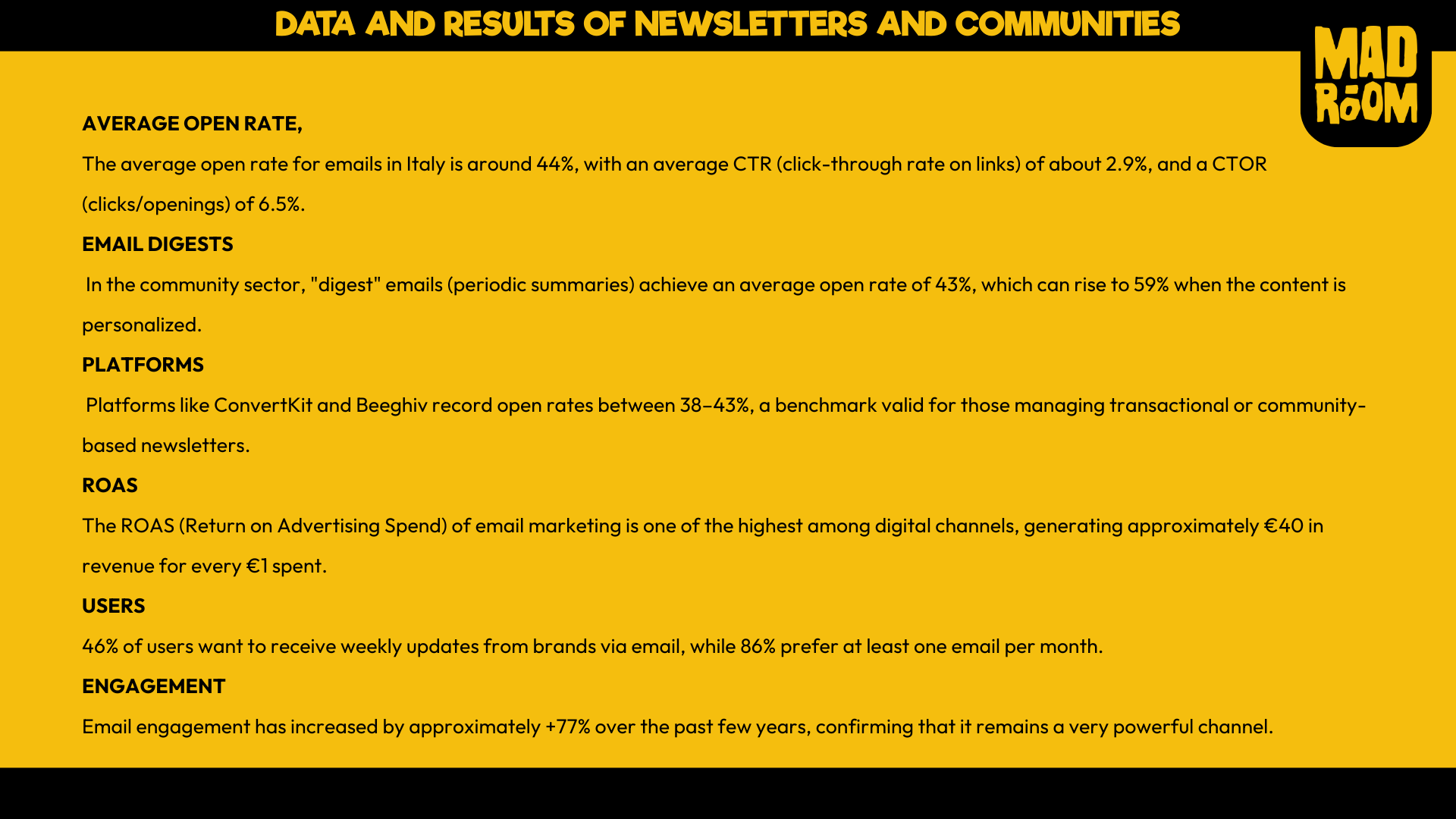
- Opening rate: measures general interest in the newsletter.
- CTR (Click Through Rate): indicates how engaging the content is.
- Conversions: show the effectiveness of the message in generating action.
- Disenrollment rate: reveals whether you are losing interest from the community.
- NPS (Net Promoter Score): Evaluate the propensity to recommend your newsletter.
A/B testing and direct feedback
Try variations of object, call-to-action, layout. Also ask directly what works and what doesn't. The most effective way to improve? Listen to the people you are addressing.
Tools and automations: efficient newsletters without losing humanity
- Mailchimp - Up to 1,000 contacts, drag-and-drop template, basic reports.
- Brevo (formerly Sendinblue) - unlimited contacts, 300 emails/day, simple automations.
- Substack - Perfect for text-based newsletters and editorial communities.
- MailerLite - up to 1,000 members, automation and popup forms.
- Moosend - Professional templates and A/B testing on free plan.
Editorial calendar and automations
Get organized with a content calendar: plan themes, dates, headings. And take advantage of automations for scheduled mailings, segmentation, and personalized messages. Modern platforms allow this, without sacrificing content quality.
Conclusion: reports before promotion
A well-designed newsletter is much more than an information channel. It is a relationship platform. It is a place to create ongoing value for those who follow you, strengthen the community and build trust over time. It's not enough to write well: you need to listen, measure, correct. One email at a time, one link at a time.